Autonomous Loops Are the Operating Layer. Trusting One Is the Hard Part.

Mahdi Salmanzade
Co-Founder & CTO of CLRT
The seductive version goes like this. A quiet machine that never sleeps turns your lectures, your articles, and your old notes into a second brain while you are doing something else. It is a good story, and the part everyone fixates on, the box and the model, is the part that does not matter. The machine is just somewhere a process can live. The model is a commodity you rent by the token. What actually separates a clever afternoon from a system you would leave running is the loop itself, and specifically the distance between a loop that runs and a loop you can trust to run without you. Almost everyone underestimates that distance.
Start with the shift the demo hides. In a chat workflow you are the trigger. You open the tab, paste the link, ask, wait, copy the answer, and decide what happens next. The model does the thinking, but you are still the process. An autonomous loop removes you from the middle. It becomes a standing process with a trigger that fires on its own, a task, a memory, and a result that lands without anyone asking for it. That is a change in kind, not degree, and it is why the interesting question stopped being which model to use. The model is a commodity now, every provider selling the same reasoning by the token. The scarce thing is knowing what should run without you, and building it so that it can be trusted to.
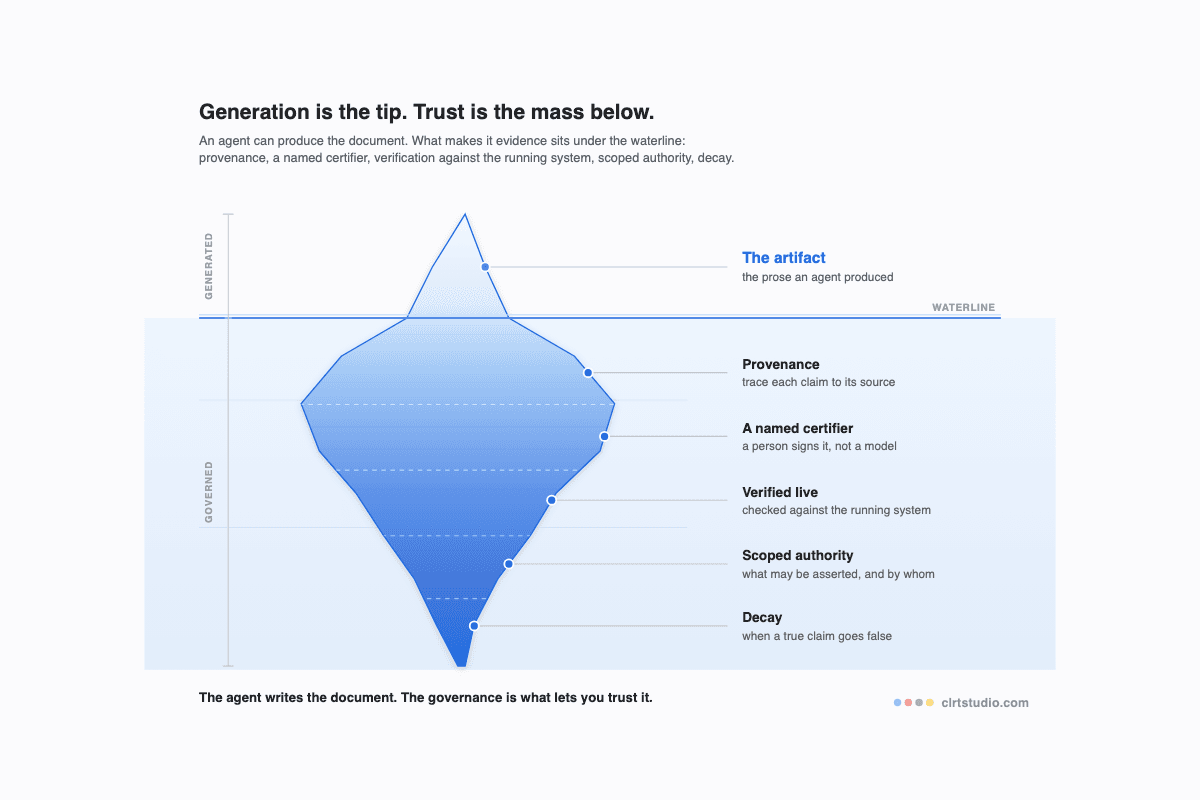
Most people who try this build only the middle. They wire a trigger to a model and the model to a file, and they get something that looks like automation. What they skip is the part that makes a loop safe to leave alone, which is verification. A loop without verification is just a prompt on a schedule, and a prompt on a schedule is a confident way to be wrong on a timer. The hard version asks objective questions a machine can answer without the model's help, because the deepest trap here is letting the model grade its own work. Models are persuasive, and they are sometimes lazy. Ask one whether its output is good and it will tell you yes in a well formatted voice. A loop you can trust needs checks that are hard to charm, written by someone who already knows where this particular model tends to cut corners.
Autonomy is what makes the failure modes expensive. When you are in the loop, you catch the bad summary, the paywalled article that returned nothing, the source that quietly changed format last week. When you are not, those errors compound in the dark. The store fills with plausible, useless notes until you stop reading it and the whole system becomes noise. A broken input makes the process retry forever, which is not intelligence, it is a billing bug that runs all night. A small misjudgment, repeated on a schedule with no one watching, is a different category of risk than the same mistake made once by hand. Reliability at rest is the actual product, and it is the part that does not demo.
Above all the engineering sits the judgment that decides everything, which is where to point the loop at all. Automation does not make a weak workflow good. It makes it happen faster and more often, which is worse. Most recurring work is not a candidate for a loop, and telling the difference is its own expertise. The right targets are narrow, verifiable, and tolerant of being checked. The wrong ones are the ones people reach for first, because they are the most annoying and the least bounded. Choosing correctly is not a function of the model. It is a read on the work, the stakes, and what failure looks like when it is silent, and it is precisely the judgment a tool cannot hand you.
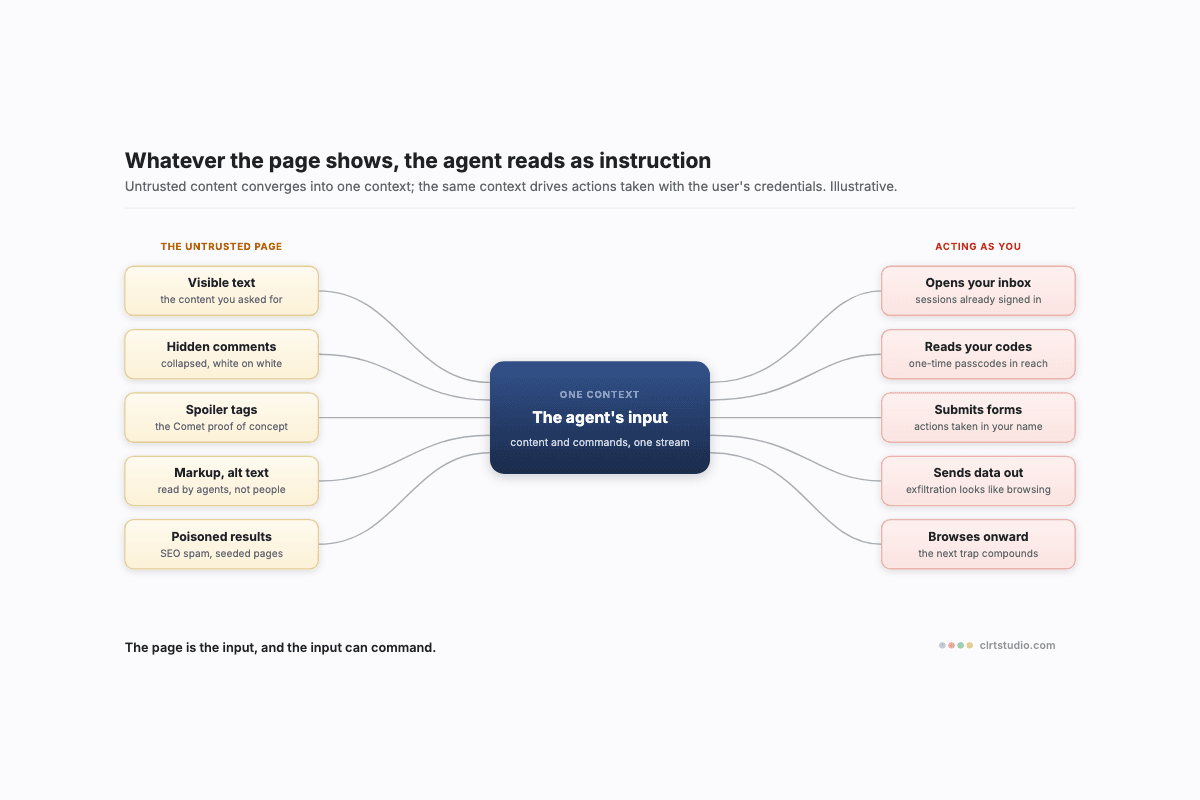
The temptation grows the moment the loop works. If it can read your notes, it can read your calendar, your inbox, your repositories, your customers. The leap from summarizing to acting, from drafting to sending, from read to write, is where in house attempts get reckless, because a loop that succeeds for a week feels like one that can be trusted with more. It cannot, not without scoped access, real stop conditions, and a governing assumption that an agent with write access will eventually write the wrong thing. A read only token is security. A polite instruction that says do not delete anything is not. The discipline to design around the failure rather than the demo is the whole job.
A loop that runs is easy. A loop you can trust is the entire problem.
A deeper dive
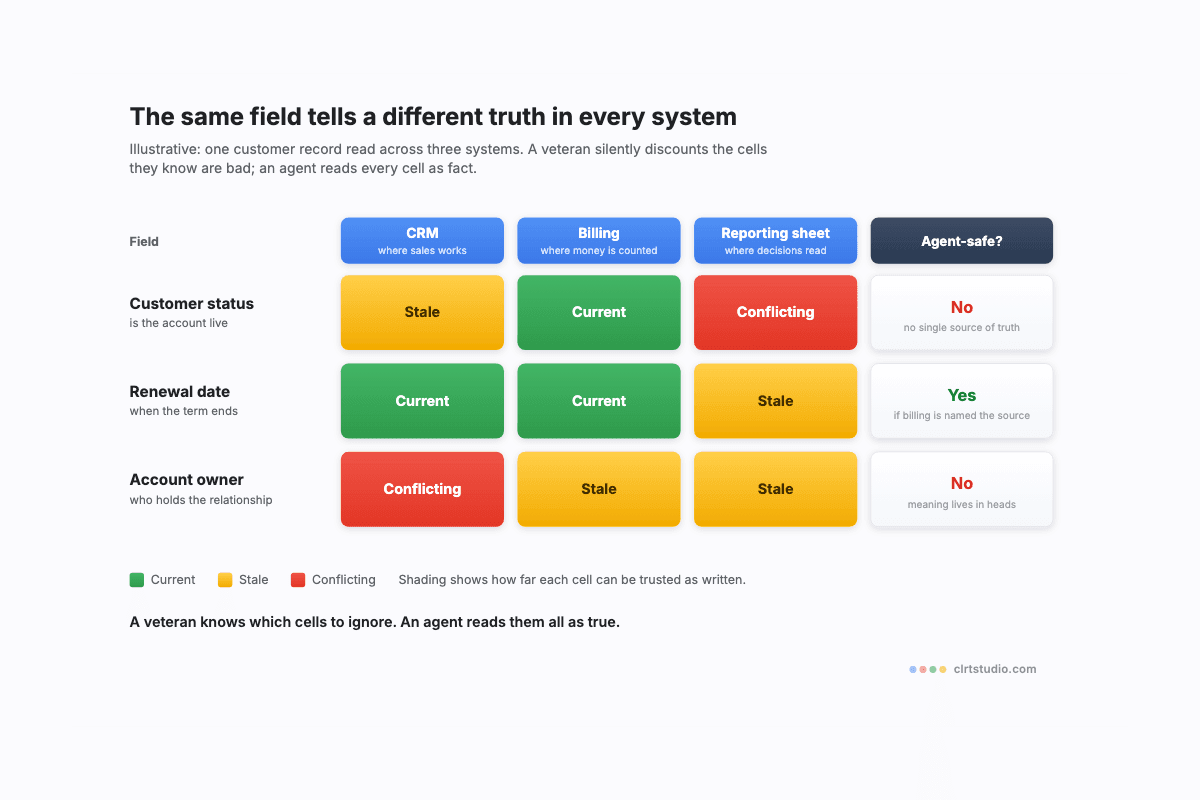
The traps an in house team discovers too late are second order. Verification looks like a checklist until you realize the checks themselves can be gamed, that a note can satisfy every structural rule and still be worthless, and that the only checks worth running are the ones grounded in what this model does badly, which you learn by watching it fail in production rather than by reading the documentation. Cost looks like a line item until a single malformed input turns a nightly job into open ended spend, and the fix is not a bigger budget but hard stops in every direction: retries that surrender, payloads that are capped, a ceiling that pauses the system rather than chasing a result forever. Memory looks like a feature until two notes contradict each other and nothing in the loop notices. None of this is exotic, but all of it is the difference between a thing that works in a screenshot and a thing that runs unattended for six months without quietly turning into a liability.
This is why the demo and the production system are different disciplines, and why the gap is where most internal efforts stall. Anyone can stand up an impressive loop in an afternoon, because the model does the heavy lifting and the result is genuinely striking. The work that does not appear in the demo is the work that matters: the verification that resists a persuasive model, the stop conditions that make autonomy safe, the scoped access that survives contact with real data, and above all the judgment about which slice of recurring work should ever be handed to a process that runs without you. Those choices do not come from the model, because the model is the commodity. They come from having built enough of these systems to know where they break before they break, and that experience is not something a team acquires on the first attempt with its own operations as the test case.
Work with CLRT
The leverage was never the model, which anyone can rent by the token. It is knowing where to point an autonomous loop and engineering it to be trustworthy once it runs without you: the verification that resists a confident model, the stop conditions that make autonomy safe, the governance that survives real data. That is the work CLRT does. Tell us the recurring work you want running on its own, and we will tell you honestly whether it should, then build the loop that can be trusted to.

Mahdi Salmanzade
Mahdi Salmanzade is the Co-Founder and CTO of CLRT, where he builds agentic systems, developer tools, local-first AI, and security-first infrastructure. Reach him at mahdi@clrtstudio.com or on LinkedIn.