The Stack Is Free. Knowing Where to Point It Is Not.

Mahdi Salmanzade
Co-Founder & CTO of CLRT
There is a guide for every tool now, and a free tier under almost every guide. A verified student with an email unlocks thousands of dollars of developer software, cloud credits, model access, design suites, and AI editors in an afternoon. The frontier model your competitor runs is one signup away from you and from a teenager. The natural conclusion, the one most businesses quietly reach, is that the advantage lives in the stack: collect enough of the right tools and you have an edge. That conclusion was true once. It is now precisely backwards.
When everyone can hold the same instruments, the instruments stop being the difference. The same models, the same agent frameworks, the same vector stores, the same editors sit one click away for every firm in your market. What was a moat in 2021, who had the compute and the API and the licence, is now a public rail anyone steps onto for nothing. Abundance did not hand businesses an advantage. It deleted the one they thought they were buying.
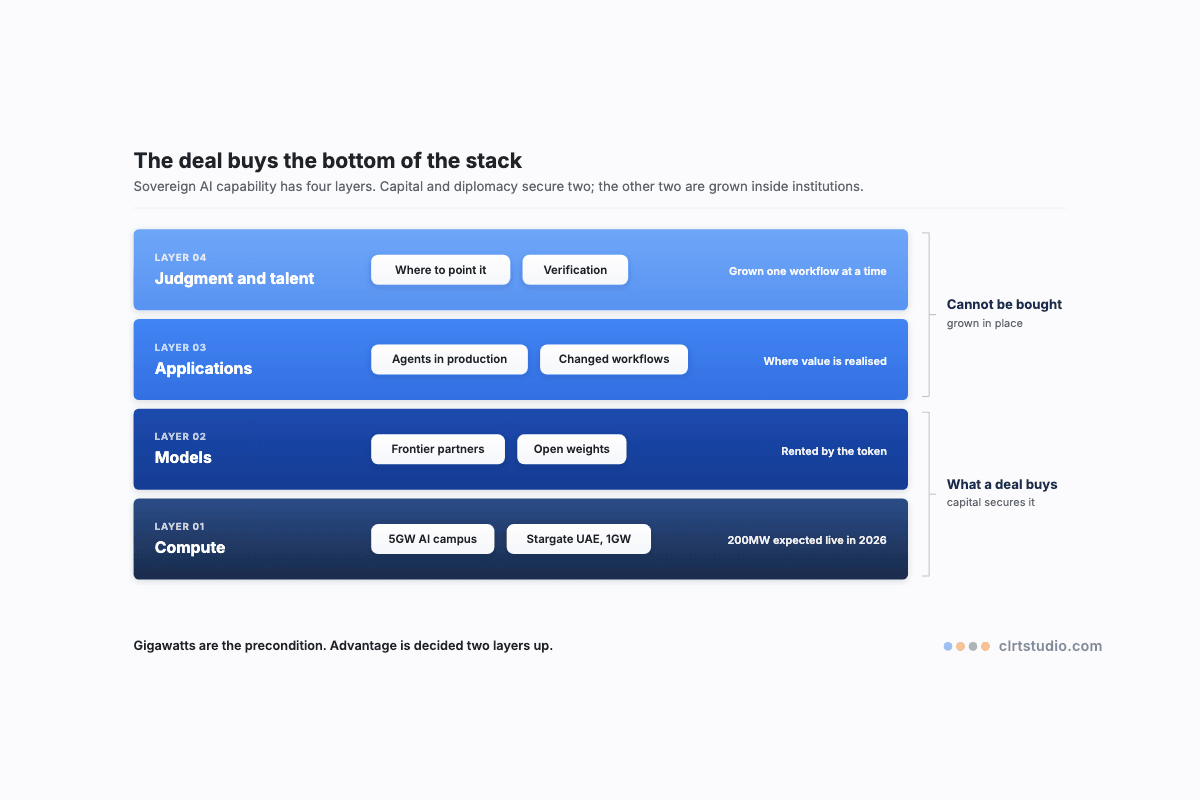
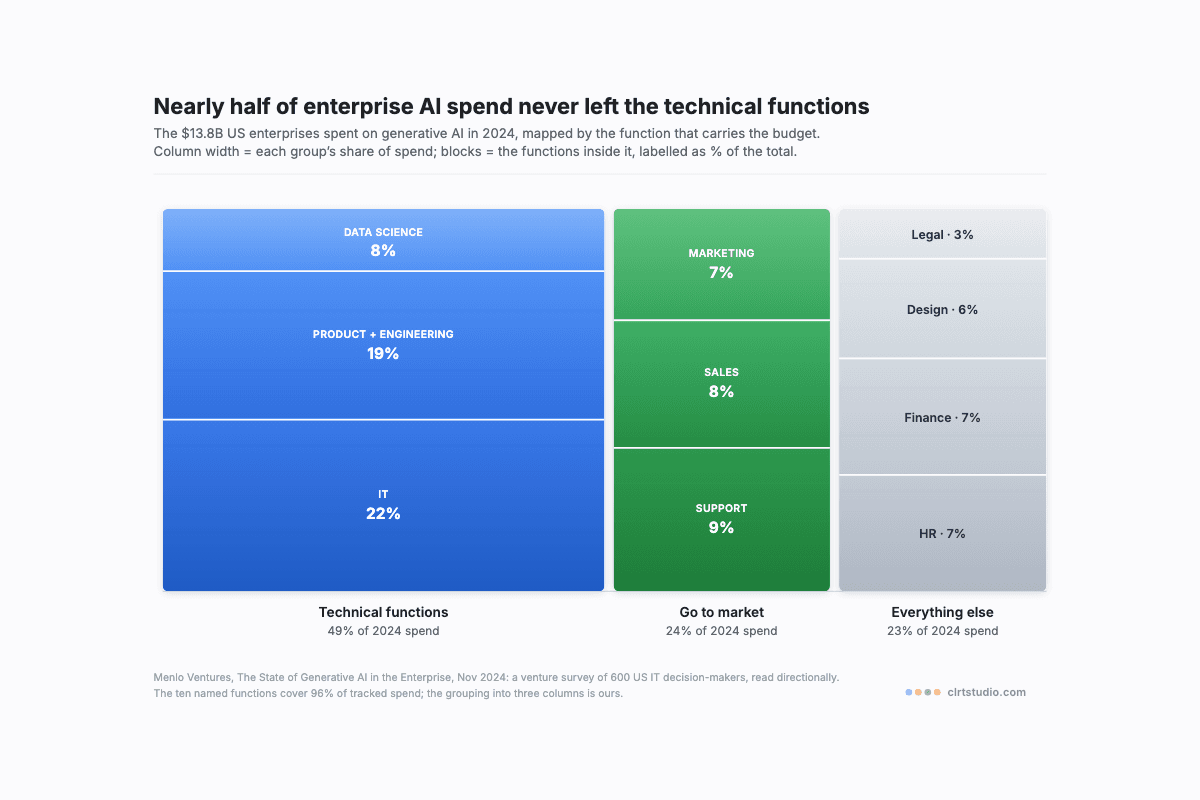
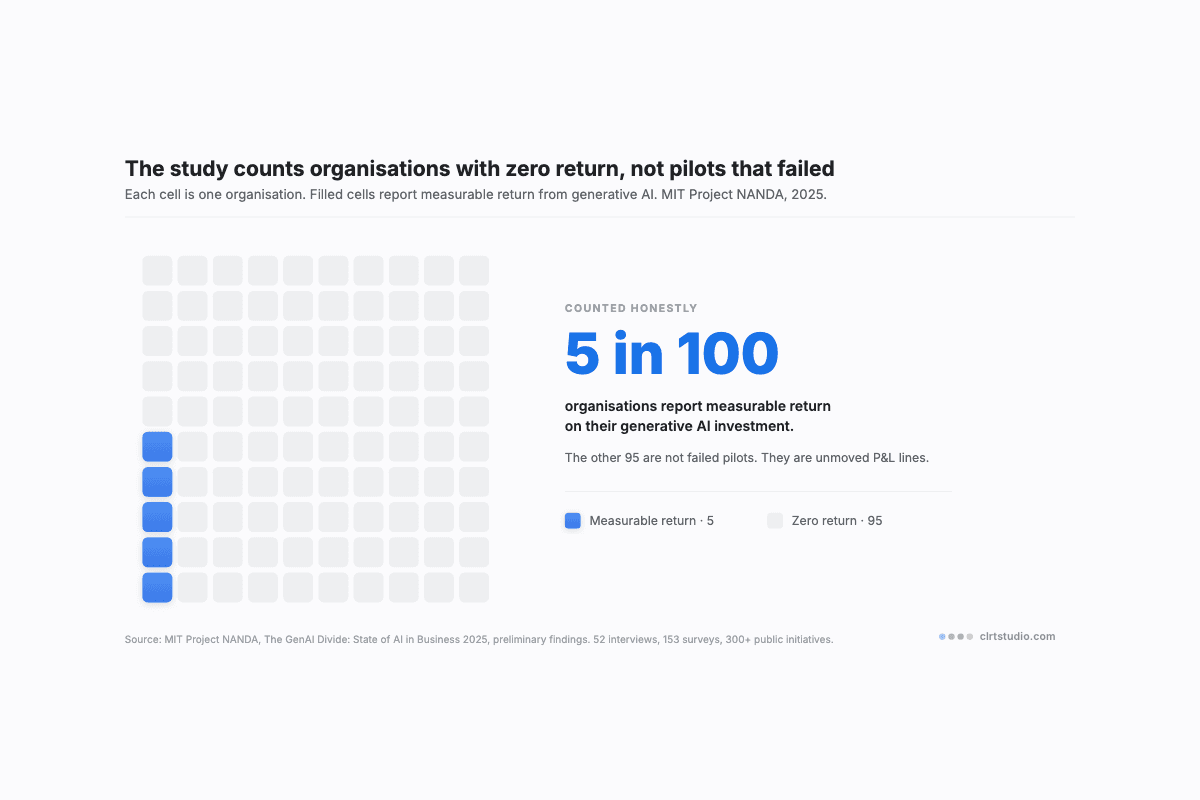
So the constraint moved, and most teams have not noticed where it went. The scarce thing is no longer which tools you own. It is knowing which workflow, which decision, which expensive hour of a real person's week actually deserves to have AI pointed at it. Plenty of businesses now own the full kit and have shipped nothing that moved a number, because owning the instrument is not the same as knowing the score. The catalogue is free. The judgment about where to aim it is not, and it does not come in the box.
The counterintuitive part is that the falling price raised the skill required rather than lowering it. When a tool was expensive and narrow, the vendor had already made most of the hard choices for you, and the tool did some of the thinking. Now the tool does anything you ask, which means every decision the vendor used to make falls back onto you: what is in scope, where the data boundary sits, what the thing is allowed to do unsupervised, how it fails, and what you are willing to put in front of a customer. The price collapsed and the judgment bill went up. An infinite, free toolbox is harder to wield well, not easier.
There is a second gap the abundance hides, and it is the one that breaks most in-house attempts. A demo is free. A system you can stand behind on a Monday, when the input is malformed and the model invents a confident wrong answer and the data is private and the customer is watching, is not. The distance between an agent that works in a notebook and one that holds up in production is almost entirely engineering and judgment: evaluation, guardrails, fallback behaviour, the unglamorous scaffolding that decides whether the thing is trustworthy or merely impressive. None of that ships with a free tier. All of it is where the value sits.
Which is the whole point, and the reason a free stack is a trap dressed as an opportunity. The firms that win with AI are not the ones with the best-assembled toolkit, because the toolkit is the same for everyone and getting cheaper by the month. They are the ones who can look at a specific business, find the one place AI creates real leverage, and build it so it survives contact with reality. That is not a purchase you can make. It is a discipline you either have or hire.
When the toolbox is free and infinite, the skill it demands goes up, not down.
A deeper dive
It is worth being precise about what actually lives in that gap, because vague talk of execution lets people imagine it is small. Between a working demo and a system a business can rely on sits the part nobody screenshots: deciding which model is good enough for which task at what cost, routing accordingly, and falling back gracefully when a provider degrades. It sits in the evaluation harness that tells you the change you just made improved the output instead of quietly breaking it. It sits in the data boundaries that keep proprietary and regulated information out of the wrong endpoint, the maker-and-checker split so the thing that did the work is never the only thing that judges it, and the monitoring that catches a silent failure before a customer does. Each of those is a deliberate engineering decision, and each depends first on a judgment about where this system is even worth pointing. The tools make none of those decisions for you. They never did.
Step back and the economics are stark. The stack is now the cheapest line in any serious AI project, often a rounding error, and it is the line every vendor is eager to sell you because tools package and scale. The expensive lines are the two that do not package: the diagnosis of where a particular business actually loses time and money, and the implementation that makes the fix trustworthy enough to keep running. Nobody sells you those off a pricing page, because judgment does not fit in a box and reliability is bespoke to your operation. That is the gap, and it is widening exactly as the tools get cheaper. The abundance everyone is celebrating is the clearest possible signal that the advantage has moved somewhere money alone cannot reach.
Work with CLRT
The tools were never going to be your advantage. They are the same tools everyone has, and they are getting cheaper while you read this. The advantage is knowing exactly where to point them inside your business and building it so it holds up in production, which is the work CLRT does and does not sell off a shelf. Bring us the stack you have already assembled and the outcome you have not, and we will show you where the leverage actually sits.

Mahdi Salmanzade
Mahdi Salmanzade is the Co-Founder and CTO of CLRT, where he builds agentic systems, developer tools, local-first AI, and security-first infrastructure. Reach him at mahdi@clrtstudio.com or on LinkedIn.